
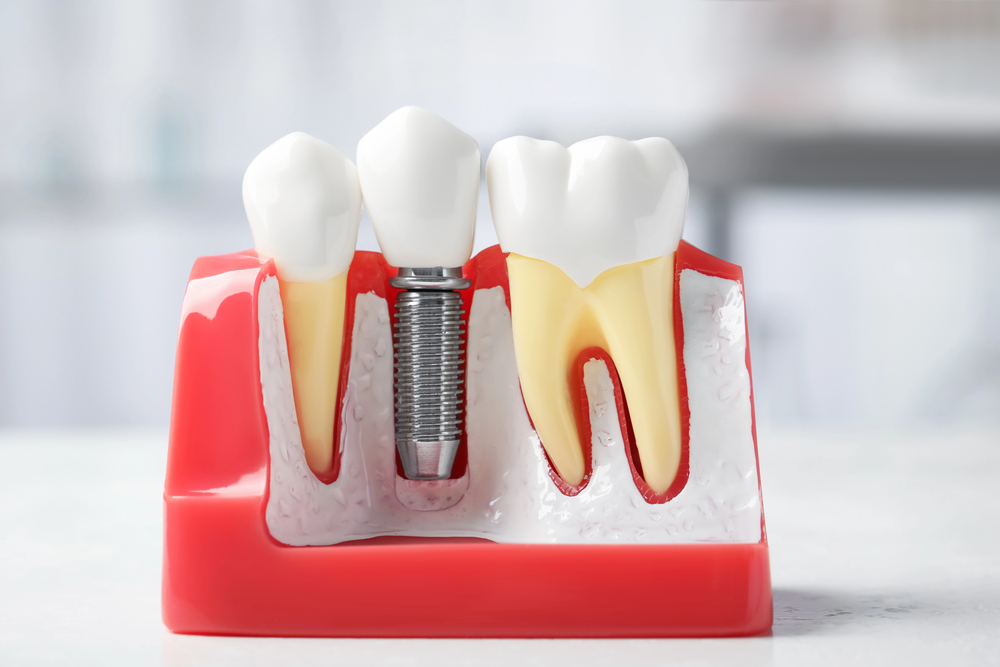
Losing a tooth can change more than the appearance of a smile. It may influence how a person chews, speaks and feels in everyday social situations. For many Australians, replacing a missing tooth is therefore about restoring something deeply practical: the freedom to eat comfortably, communicate naturally and feel confident without constantly thinking about their teeth.
Dental implants have become an important option for suitable patients seeking long-term tooth replacement. Yet the experience of receiving an implant is evolving. Digital imaging, computer-assisted planning and modern restorative technologies are helping dental professionals assess individual cases with greater precision and communicate treatment options more clearly. Together, these developments are reshaping how patients move from their initial consultation towards a restored smile.
Why Digital Dentistry Is Changing Implant Treatment
Traditional implant treatment relies on clinical examinations, diagnostic imaging and the professional judgement of the treating dentist. These remain essential, but digital technologies can provide additional information to support planning.
Three-dimensional cone beam computed tomography, commonly known as CBCT, can help clinicians examine the jawbone, identify important anatomical structures and assess the available space for an implant. When clinically indicated, this imaging may provide information that conventional two-dimensional X-rays cannot show as clearly.
Digital intraoral scanners can also capture detailed representations of the teeth and surrounding oral structures without relying on traditional impression materials. These scans may be combined with imaging data and restorative planning software to help the dental team determine how a proposed implant could support the final replacement tooth.
The significance lies in the connection between planning and outcome. An implant is not simply a fixture placed into the jawbone; it must work in harmony with the surrounding teeth, bite, gums and facial structures. Digital tools can help clinicians evaluate these relationships before treatment begins.
However, technology does not eliminate uncertainty. Healing, bone quality, medical history and individual biological responses still influence the result. Digital planning supports clinical judgement rather than replacing it.
Restoring One Tooth with a More Personalised Approach
When a single tooth is missing, the surrounding teeth may remain healthy and functional. In suitable cases, a single implant can provide support for an individual replacement crown without requiring neighbouring teeth to be prepared for a conventional tooth-supported bridge.
The process generally begins with a comprehensive assessment. The dentist examines the gums, remaining teeth, bite and jawbone while considering the patient’s medical history and oral hygiene. Imaging may be recommended to determine whether sufficient bone is available and whether additional procedures might be necessary.
Digital planning can help the clinician position the implant in relation to the intended crown. This restorative perspective is important because the implant must support a tooth that looks natural while functioning comfortably during chewing.
For some patients, guided implant surgery may be appropriate. A surgical guide created from digital planning can help transfer the intended implant position to the clinical setting. Its suitability depends on the case, and the guide does not remove the need for surgical expertise or careful intraoperative assessment.
Once the implant has been placed, it generally requires time to integrate with the surrounding bone. The final crown may be fitted after the dentist determines that healing and stability are suitable. Some patients qualify for temporary teeth or earlier restoration, but immediate loading is not appropriate in every situation.
A More Connected Patient Journey
One of the most valuable developments in digital dentistry is the ability to connect different stages of treatment. Information gathered during assessment can help inform implant planning, surgical preparation and the design of the replacement tooth.
This can make the process easier to explain to patients. Digital images and visual treatment plans may help them understand where an implant is intended to sit, why a particular approach is recommended and what limitations need to be considered.
For people who feel anxious about dental surgery, clearer explanations can make consultations more manageable. Patients can ask questions about healing, discomfort, maintenance and possible alternatives before making a decision.
This is particularly important because implant treatment is not always the best option for every person. A conventional bridge, a removable partial denture or another approach may be more appropriate depending on oral health, medical circumstances, cost and personal preferences.
Good treatment planning therefore involves more than demonstrating what technology can achieve. It requires explaining what is realistic for the individual patient.
Bone Health, Healing and the Importance of Preparation
Although digital tools can improve assessment and planning, successful implant treatment depends on biological conditions as well as technical precision.
The jawbone must provide adequate support, and the surrounding gums need to be sufficiently healthy. Gum disease should be assessed and managed before implant treatment proceeds. Smoking, poorly controlled diabetes and certain medications or medical conditions may also influence healing and implant outcomes.
When bone volume is insufficient, some patients may require bone grafting or other preparatory procedures. Digital imaging can help the clinician evaluate these possibilities, although the final decision must be based on a complete clinical assessment.
Patients also have an important role after treatment. Following postoperative instructions, maintaining thorough oral hygiene and attending recommended reviews help protect the implant and surrounding tissues. Implants cannot develop tooth decay in the same way as natural teeth, but the tissues supporting them can become inflamed or damaged.
Long-term success is therefore a partnership between appropriate professional care and consistent patient maintenance.
Redefining the Standard of Care Through Responsible Innovation
Digital dentistry has expanded the options available to clinicians and patients, contributing to a procedure that has redefined the standard of care for patients seeking tooth replacement. The phrase reflects the broader evolution of implant dentistry: treatment is increasingly informed by detailed diagnostics, coordinated planning and a stronger emphasis on the intended restorative result.
Nevertheless, a high standard of care cannot be measured by technology alone. A sophisticated scanner or guided surgical system is valuable only when it contributes meaningfully to diagnosis, planning or treatment. The clinician’s training, experience, ethical judgement and ability to manage complications remain fundamental.
For Australian patients, this means asking practical questions when considering implant treatment. What are the alternatives? Is additional imaging necessary? How long might healing take? What costs are included in the proposed treatment? What maintenance will be required, and what happens if complications develop?
Clear answers help patients understand both the advantages and the responsibilities associated with implant dentistry.
A Future Built Around Individual Needs
As digital tools continue to develop, implant treatment may become increasingly integrated with personalised restorative planning, improved clinical communication and more efficient workflows. Artificial intelligence and advanced software may assist with selected diagnostic and planning tasks, but their benefits will depend on appropriate validation and professional oversight.
For Australian patients, the most meaningful progress is not simply the introduction of newer equipment. It is the opportunity to receive care that is carefully planned, clearly explained and adapted to individual circumstances.
Replacing a missing tooth is ultimately about restoring everyday function and confidence. Digital dentistry can help make that journey more informed, but its greatest value emerges when innovation is guided by sound clinical judgement and realistic expectations.
A new era of tooth replacement is not defined by technology acting alone. It is defined by technology helping dental professionals see the whole picture: the missing tooth, the surrounding structures, the patient’s needs and the long-term health of the restored smile.